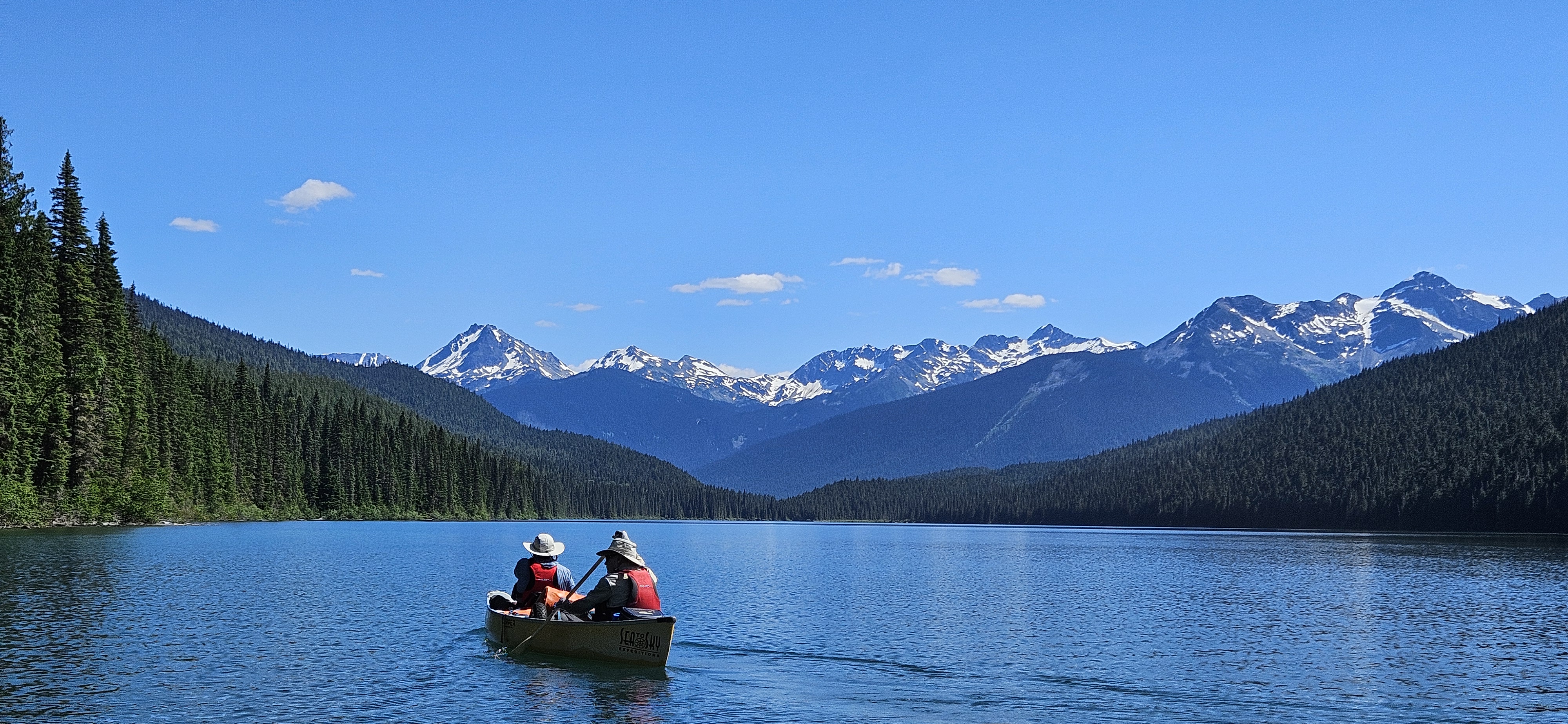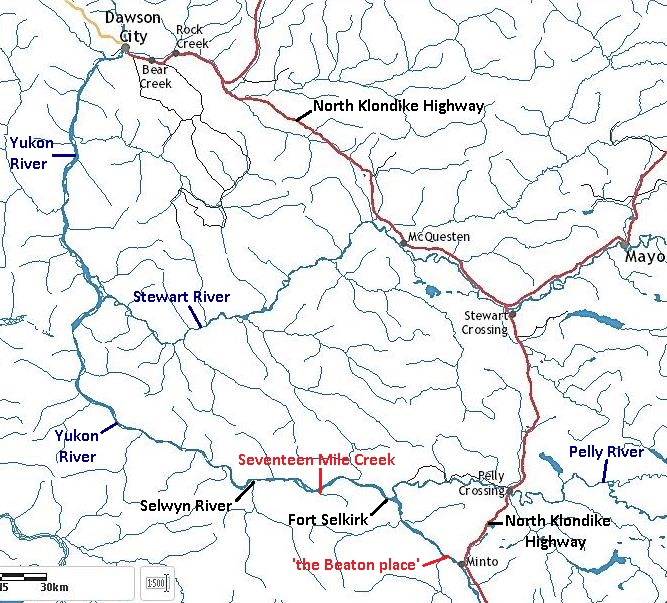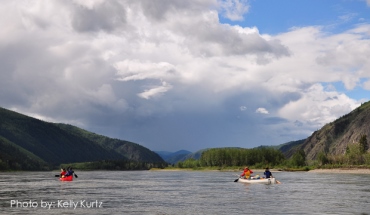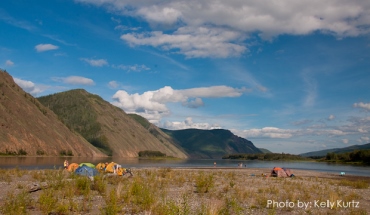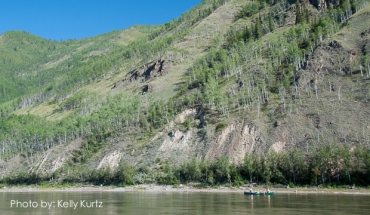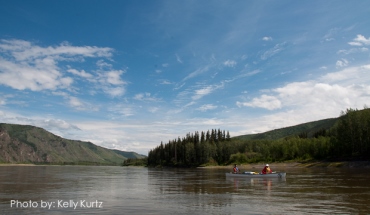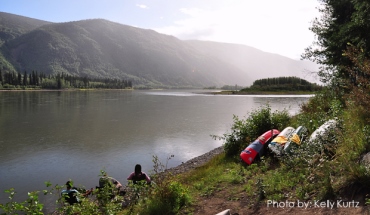
We wanted to create a trip that captures the quieter, more accessible side of the Yukon. We believe our Nisutlin River canoe journey achieves that goal. We selected the Nisutlin because, shortly after leaving the Alaska Highway behind, the river slips into a broad valley of wetlands, spruce forest, and distant mountain ridges, carrying us steadily into true northern wilderness. The gentle current transports us through open boreal landscape under vast Yukon skies. The river winds past willow flats and gravel bars where moose feed in the shallows and bald eagles patrol overhead. Birdlife is abundant, and the sense of remoteness grows with each passing day. Our camps are simple and beautiful — quiet riverside sites where long summer evenings stretch late into twilight. With no technical rapids and no road access along most of the route, the Nisutlin offers both comfort and solitude — a wilderness experience that is peaceful, immersive, and distinctly Yukon.
The Nisutlin River is a classic Yukon wilderness waterway flowing through wide valleys, quiet wetlands, and distant mountain ranges. This 130 km journey is ideally suited to families and first-time paddlers. With a steady, gentle current and no technical rapids, the river offers a relaxed, confidence-building introduction to canoe tripping. Despite its approachable character, this is true northern wilderness. Moose browse along the shallows, black bears wander the willow-lined banks, and migratory birds fill the wetlands. Our journey finishes at Nisutlin Bay on Teslin Lake, near the welcoming village of Teslin.
Activity LevelLow Moderate
5/10
Group SizeMedium
max 10 guests, 2 guides
THE SEA TO SKY ADVANTAGE
35+ years of leading expeditions. Nutritious and delicious foods are our specialty. Our guides go beyond leading and transport you to a new place.
Small Groups
Greater access to your expert local guide for a more intimate and personalised experience.

35+Years Experience
Thousands of delighted guests with many returning for more. Experience the Sea to Sky difference and find out why.

Certified Guides
Enthusiastic and knowledgeable, our guides offer invaluable source of information on local culture, history and sights making your trip one of a kind.
West Coast Trail Dates for 2026 are now Parks confirmed.
May 18-26, 2026 - $2855 + 3% Booking fee + 5% GST 6 Spaces Available
May 30-June 7, 2026 - $2855 + 3% Booking fee + 5% GST 7 Spaces Available
June 14-22, 2026 - $2855 + 3% Booking fee + 5% GST 7 Spaces Available
June 28-July 6, 2026 - $2855 + 3% Booking fee + 5% GST 1 Space Available
July 14-22, 2026 - $2855 + 3% Booking fee + 5% GST 1 Space Available
July 28-August 5, 2026 - $2855 + 3% Booking fee + 5% GST 1 Space Available
August 12-20, 2026 - $2855 + 3% Booking fee + 5% GST 3 Spaces Available
August 26-September 3, 2026 - $2855 + 3% Booking fee + 5% GST 7 Spaces Available
Our sister company, Coastal Bliss Adventures also runs West Coast Trail Tours. Coastal Bliss Adventures West Coast Trail Dates for 2026
May 31-June 8, 2026 - $2855 + 3% Booking fee + 5% GST 8 Spaces Available
June 12-20, 2026 - $2855 + 3% Booking fee + 5% GST 8 Spaces Available
June 26-July 4, 2026 - $2855 + 3% Booking fee + 5% GST 1 Space Available
July 12-20, 2026 - $2855 + 3% Booking fee + 5% GST 1 Space Available
July 26-August 3, 2026 - $2855 + 3% Booking fee + 5% GST 6 Spaces Available
August 10-18, 2026 - $2855 + 3% Booking fee + 5% GST 8 Spaces Available
August 24-September 1, 2026 - $2855 + 3% Booking fee + 5% GST 8 Spaces Available
September 8-16, 2026 - $2855 + 3% Booking fee + 5% GST 6 Spaces Available
North Coast Trail 2026 Dates ("G" indicates guaranteed departure.)
We run scheduled North Coast Trail tours every other year (the next year will be 2027). We will run custom tours for four or more in 2026. Phone to inquire.
Cape Scott Explorer 2026 Dates ("G" indicates guaranteed departure.)
July 4-9, 2026 - $2,245 + 3% booking fee + 5% tax 8 spaces available
July 21-26, 2026 - $2,245 + 3% booking fee + 5% tax 8 spaces available
August 19-24, 2026 - $2,245 + 3% booking fee + 5% tax 8 spaces available
Nootka Island Trail 2026 Dates ("G" indicates guaranteed departure.)
June 18-23, 2026 - $3,180 + 3% booking fee + 5% tax 8 spaces available
July 15-20, 2026 - $3,180 + 3% booking fee + 5% tax 8 spaces available
August 19-24, 2026 - $3,180 + 3% booking fee + 5% tax 7 spaces available
South Chilcotins 2026 Dates
The South Chilcotin Mountain tour has been significantly changed over the last several years due to 3rd-party service changes and the Downton Lake fire of 2023. It is still a fantastic trip, a little more difficult than previously, more high country, but well worth the spectacular views and alpine environment. We offer two options: a fly-in/hike-out option and a hike-in/out option.
Fly-in: July 31-August 6, 2026 - $3697 + 3% booking fee + 5% tax 6 spaces available
Tombstone Mountains Hike 2026 Date Ranges ("G" indicates guaranteed departure.)
These are tentative dates. Yukon Parks only opens up the dates for booking access reservations to ALL hikers and companies in January 2026. We can't guarantee exact starting and ending dates until then.
July 27-August 3, 2026 Fly-in - $3,749 + 3% booking fee + 5% 3 spaces available
August 11-18, 2026 Fly-in - $3,749 + 3% booking fee + 5% 5 spaces available
August 23-30, 2026 Fly-in - $3,749 + 3% booking fee + 5% 3 spaces available
July 31-August 5, 2026 - $3130 + 3% booking fee + 5% tax 8 spaces available (Inquire about availability)
We will be running this tour in 2026, scheduled every other year. Plan your trip on this remote coastal hike for 2026 or 2028.
Due to political realities, this is now a Canada-only trip as the border crossing is closed. It is now a train-in/floatplane out trip. Check the itinerary for details.
Chilkoot Trail 2026 Dates - The following are dates for a CANADA ONLY Chilkoot trip.
July 8-14, 2026 - $3,699 +3% booking fee + 5% tax 6 Spaces Available
August 13-19, 2026 - $3,699 +3% booking fee + 5% tax 8 Spaces Available
Broken Group Islands 2026 Dates ("G" indicates guaranteed departure.)
(6 days) July 2-7, 2026 - $2,275 + 3% booking fee + 5% tax *8 spaces available
(4 days) July 2-5, 2026 - $1,754 + 3% booking fee + 5% tax *8 spaces available
(6 days) July 26-31, 2026 - $2,275 + 3% booking fee + 5% tax 8 spaces available
(4 days) July 26-29, 2026 - $1,754 + 3% booking fee + 5% tax 8 spaces available
(6 days) August 9-14, 2026 - $2,275 + 3% booking fee + 5% tax *8 spaces available
(4 days) August 9-12, 2026 - $1,754 + 3% booking fee + 5% tax *8 spaces available
(6 days) August 28-September 2, 2026 - $2,275 + 3% booking fee + 5% tax *8 spaces available
Turner Lakes Canoeing Tour 2025 Dates This Trip Is In The Middle Of The Permitting Process. We are awaiting the final word on the permit. ("G" indicates guaranteed departure.)
Yukon River Canoeing 2026 Dates ("G" indicates guaranteed departure.)
June 17-26, 2026 - $3380 + 3% booking fee + 5% tax
$3119 for 2-3 people booking directly by phone
$2769 for 4+ people booking directly by phone at +1-250-715-0034 10 spaces available
July 12-21, 2026 - $3380 + 3% booking fee + 5% tax
$3119 for 2-3 people booking directly by phone
$2769 for 4+ people booking directly by phone at +1-250-715-0034 10 spaces available
July 29-August 7, 2026 - $3380 + 3% booking fee + 5% tax
$3119 for 2-3 people booking directly by phone
$2769 for 4+ people booking directly by phone at +1-250-715-0034 10 spaces available
August 16-25, 2026 - $3380 + 3% booking fee + 5% tax
$3119 for 2-3 people booking directly by phone
$2769 for 4+ people booking directly by phone at +1-250-715-0034 10 spaces available
Teslin River Canoeing 2026 Dates
June 17-26, 2026 - $3199 + 3% booking fee + 5% tax
$2879 for 2-3 people booking directly by phone
$2559 for 4+ people booking phone at +1-250-715-0034 Contact us to enquire
July 29-August 7, 2026 - $3199 + 3% booking fee + 5% tax
$2879 for 2-3 people booking directly by phone
$2559 for 4+ people booking phone at +1-250-715-0034 Contact us to enquire
Nisutlin River Canoeing 2026 Dates
July 1-7, 2026 - $3380 + 3% booking fee + 5% tax 10 spaces available
August 10-16, 2026 - $3380 + 3% booking fee + 5% tax 0 spaces available (custom, private)
August 19-25, 2026 - $3380 + 3% booking fee + 5% tax 10 spaces available
Book Your Trip
Searching Availability...
Itinerary
A complete itinerary along with maps, clothing and equipment list, will be issued upon registration.
Day 0: Arrival in Whitehorse
Welcome to the Yukon.
Your guide will meet you in Whitehorse in the late afternoon for a full orientation and gear check. We review the route, safety systems, canoe packing strategy, and expectations for wilderness travel. This is an opportunity to refine equipment, distribute group gear, and meet your fellow paddlers.
After breakfast, we travel south along the Alaska Highway toward our put-in on the Nisutlin River. The drive offers broad views of boreal forest and distant ranges — a gradual transition from town to open northern landscape. At the river, we organize food barrels and dry bags, review paddling technique, and load the canoes. We begin with a shorter introductory paddle to ease into the rhythm of the current. The calm water provides an ideal setting to practice steering, communication, and teamwork. We establish our first riverside camp in the afternoon. As the long Yukon evening unfolds, your guide prepares a hearty backcountry meal and the group settles into wilderness life. (Overnight at wilderness campsite)
This morning we break camp and continue downstream. The Nisutlin’s gentle current does much of the work, allowing paddlers to focus on reading the river and refining technique. The landscape opens into wide wetlands framed by low hills and distant mountains. Wildlife sightings are common — moose in the shallows, beaver activity along the banks, and waterfowl rising from hidden back channels. Camp routines begin to feel natural. Evenings are unhurried, with time for fishing, campfire games, or simply watching the northern light linger late into the night. (Overnight at wilderness campsite)
As we move farther from the highway corridor, the sense of remoteness deepens. The river winds steadily through classic Yukon boreal forest — spruce, willow, open gravel bars, and expansive sky. We paddle at a relaxed pace, stopping for riverside lunches and short explorations. By now, teamwork in the canoes feels smoother and more intuitive. The evening camp offers time to share stories, enjoy a substantial meal. (Overnight at wilderness campsite)
The middle section of the Nisutlin flows through rich wetland habitat that supports abundant birdlife. Bald eagles patrol overhead, loons call across the water, and the stillness of the valley can feel almost timeless. Today we settle fully into the cadence of river travel — paddle, drift, observe. There is no rush. Yukon summer provides long daylight hours and flexibility in distance and timing. Camp is established in a quiet riverside setting where wildlife movement is often most active in the calm of evening. (Overnight at wilderness campsite)
The valley widens further as we continue downstream. The scale of the Yukon landscape becomes more apparent — broad horizons, layered ridgelines, and immense sky. With skills now well developed, paddling feels efficient and relaxed. We may take extra time for fishing, photography, or simply drifting with the current in reflective silence. Our second-to-last night on the river offers time to appreciate how comfortable and capable the group has become in this environment. (Overnight at wilderness campsite)
Today is our final complete day immersed in river life. The Nisutlin continues its steady course toward Teslin Lake, and subtle changes in water movement and valley shape hint that the journey is nearing its conclusion. We savour the pace — unhurried paddling, a long lunch break, and one final riverside camp. This last wilderness evening often carries a special tone: shared accomplishment, quiet reflection, and appreciation for the simplicity of life on the water. (Overnight at wilderness campsite)
On our final morning, we paddle the last stretch into Nisutlin Bay and the shores of Teslin Lake. The widening water and distant shoreline views signal the completion of our 130 km journey. In the village of Teslin, our vehicle awaits — along with well-earned ice cream. After loading gear, we return to Whitehorse, where the trip concludes. You leave with strengthened paddling skills, deeper wilderness awareness, and shared memories of life along one of the Yukon’s classic canoe rivers.
inclusions and exclusions at a glance
Whats included in this tourItems that are covered in the cost of tour price.
Transportation from the point of origin and return
Snacks/beverages on the expedition
All meals while on the canoeing portion**
Meal preparation
Canoes, life jackets, paddles
Canoe dry bags
Canoe carts
Any park fees
Camping fees
Exceptional guides for the entire journey
Cooking gear/camp stoves/water filtration
Tents & tarps
Emergency radio/satellite phone/major first aid supplies
† We can provide sleeping bags, sleeping pads, and some other gear for rent. Click here for Gear Rental Options and pricing.
Whats not included in this tourItems that are NOT covered in the cost of tour price.
Transportation to point of origin, transfers, personal equipment, accommodation and food other than included in the itinerary.
Gratuities are not included. Our guides make every effort to ensure your holiday is all you expected and more. Recognition of a job well done is always appreciated; $10-20 per day per guide is recommended.
WHITEHORSE
SEA to SKY will pick up for all expeditions that originate in Whitehorse. Should any problems or miscommunication arise, please email our office and we will forward you the guide team's contact info. (cell number and email address).
GETTING TO WHITEHORSE Air Canada has daily flights to Whitehorse. Air North has scheduled flights from Calgary, Edmonton, Victoria and Vancouver. Please check with your travel agent for details.
Places to stay and other details
Whitehorse Whitehorse Pick up & Hotels
The following represent a cross section of available accommodation in Whitehorse. Former clients have stayed at these and have indicated a satisfaction with them. The asterisk [* ] means a budget and clean accommodation. The Yukon Inn has agreed to discount their rate for our clients. Indicate that you will be doing a trip with us and you should receive a preferred rate.
You don't need to have paddled before. Experience helps, but we will show you everything you need along the way. Our guides will assist you and teach you basic paddling skills.
In Canada, where are there NOT bugs? Fortunately, we are not deep in the forest or muskeg, where the mosquitoes and/or blackflies cover you like a blanket. Typically, if there is a breeze, there are no bugs. If it is calm, there are bugs. On the actual west coast, there are relatively few mosquitos and no-seeums, but some. It is helpful to have a bug net for your head and some bug spray with you.
There is never an intention for you to flip and get soaked, but sometimes it happens. We provide you with dry bags for your clothing and gear. We also show you how to properly use them to make sure your things stay dry.
Tips, or gratuities, are not mandatory. However, please consider what service is actually being given to you. While you might think that the company should just pay the guides better, it is not so simple. We do work in a competitive market, and pay rates are a function of the trip prices. If we could double prices, we would pay guides significantly better. At Sea to Sky, we have some of the better pay rates in the industry, and we are always pushing our competitors to increase pay rates for guides, but there is only so much we can do. Guides are seasonal workers. They shift off of their summer season to winter activities, or fill in with retail work, which is usually little more than minimum wage, often to periods of no work between seasonal jobs. It is a hard job, and wearing on the body.
The guides carry most of the group gear, so they have heavier loads than you have, all for you, because they would not be carrying much of the extras on a personal trip. Your guides are teaching you, helping you through challenges, cooking for you and serving you your meals, providing a safety envelope for you, and if you have a really good guide, they are filling you up with a deeper experience of being in the place you are visiting by telling you about the flora, fauna and history of the place.
So, how much should you tip your guides?
If you ate every meal out in a day, at a good, but low-cost restaurant, you would probably tip between $10 and $15 per day. If you were travelling and visiting a city and ate all your meals out, this is about how much you would tip for the day, low end. I would submit that the guides are feeding you all three meals in a day, AND serving you in so many more ways. That makes $10-$15 a day a minimum consideration, really. 10% to 15% of a trip price has been another rule of thumb that has been used. If your trip price is $2000, then $200 to $300 split between the guides is reasonable, and falls within that standard. Like most humans, guides are motivated when they are recognized and valued.
Your circumstances matter. If you are a student and clearly struggled to put together the cost of the trip, or have other circumstances that limit your ability to tip, guides understand and honour your appreciation, no matter what the size. However, if you have a large income or high net worth and means, a small tip might be a slap in the face. If you have means and you clearly and vocally appreciated the guides and all they did, and then leave a $50 tip after a 7 to 9 day trip, that amount would probably be insulting. If you have a fairly large income or net worth, you likely spend it on higher end restaurants, and maybe higher cost wine, drinks or desserts. You might even give a $50 tip for a dinner meal out-for ONE meal, so just consider your ability to tip and the level of service you received over the whole trip.
The largest tip any of our guides has received from one person is $1,500.00 for a 9-day trip. This was highly unusual, and was because we went way out of the way to replace her boots in the middle of the trail because her boots were falling apart, and was on top of paying for the boots and the transport out to the trail. That was extraordinary service, and an extraordinary tip. On average, guides usually receive about $75 to $125 from each guest for each guide.
At Sea to Sky, we also split the tips between the lead and assistant guides, and proportionally with any drivers. We have a strong culture of teamwork and both the lead and assistant guides play essential roles for you, so we ensure both share equally in the tips for the trip. Tips are not shared or taken by owners and managers not on your trip, unless you send it separately and specify it is for service before or after a trip.
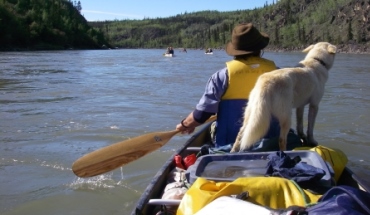
What should I wear? What clothes are suitable?
For any wilderness adventure, "layering" is one of the most critical concepts. Layering clothing can have several advantages:
Temperature regulation: Layering allows you to adjust your level of warmth by adding or removing layers as needed. This can be especially useful in unpredictable weather or in environments with fluctuating temperatures. Comfort: Layering can help you stay comfortable in a range of temperatures and activities. For example, if you're going for a hike, you can wear a base layer to wick sweat away from your skin, a mid layer for insulation, and a outer layer to protect against wind and rain. Versatility: Layering allows you to mix and match different pieces of clothing to create different looks and adapt to different situations. Style: Layering can add depth and interest to your outfit, allowing you to express your personal style and create a polished look. Protection: Layering can also provide protection against the elements, such as wind, rain, and cold temperatures.
For any wilderness adventure, "layering" is one of the most critical concepts.
Layering clothing can have several advantages:
Temperature regulation: Layering allows you to adjust your level of warmth by adding or removing layers as needed. This can be especially useful in unpredictable weather or in environments with fluctuating temperatures.
Comfort: Layering can help you stay comfortable in a range of temperatures and activities. For example, if you're going for a hike, you can wear a base layer to wick sweat away from your skin, a mid layer for insulation, and a outer layer to protect against wind and rain.
Versatility: Layering allows you to mix and match different pieces of clothing to create different looks and adapt to different situations.
Style: Layering can add depth and interest to your outfit, allowing you to express your personal style and create a polished look.
Protection: Layering can also provide protection against the elements, such as wind, rain, and cold temperatures.